Restricted Use Pesticide Usage: North Shore Oʻahu
Haleiwa-Kahuku
Executive Summary (2020-2021)
This analysis of Restricted Use Pesticide (RUP) usage data in North Shore Oʻahu includes the communities of Haleiwa, Marconi and Kahuku. This includes only a few parcels with use near Haleiwa and then a few consistent users on the far north shore around Marconi and Kahuku.
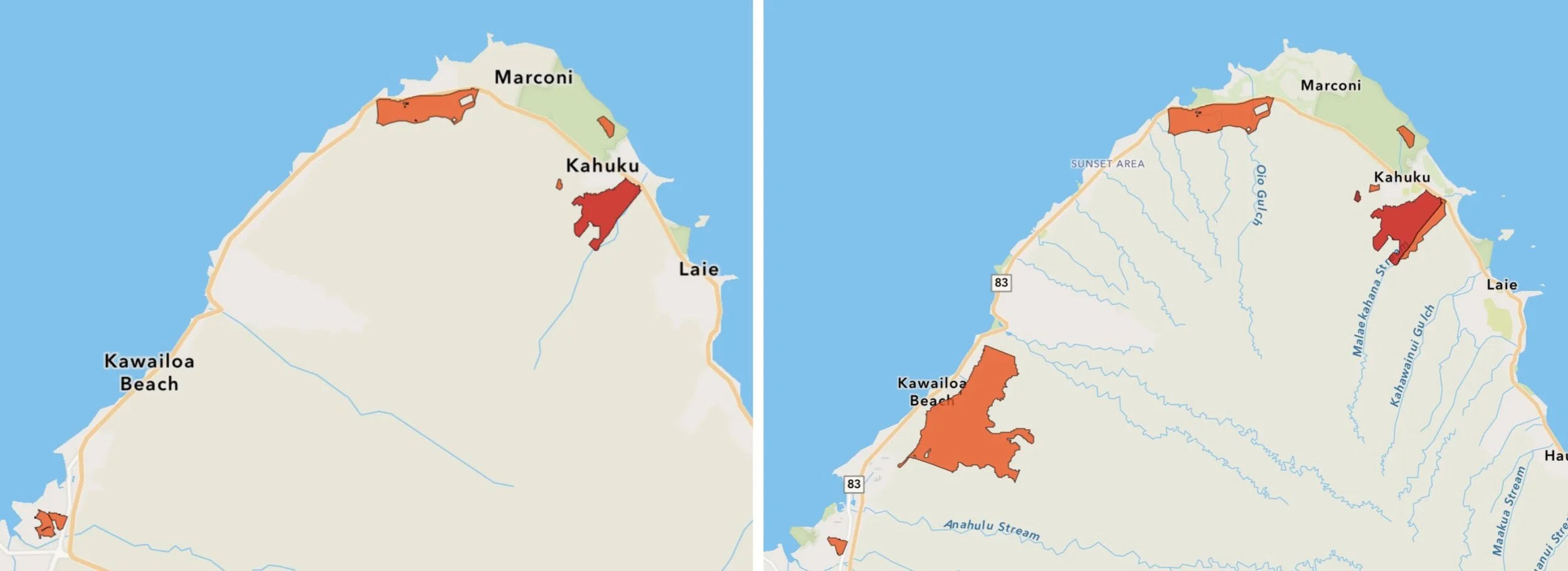
2020 & 2021
Key Findings
1. Continued use of highly hazardous pesticides near communities
Reported pesticide use on the North Shore includes chemicals with well-documented acute and chronic toxicity, including:
Paraquat dichloride, one of the most acutely toxic herbicides still registered in the U.S.
Methomyl, oxamyl, and naled, neurotoxic carbamate and organophosphate insecticides.
Abamectin, highly toxic to aquatic invertebrates and fish.
Multiple synthetic pyrethroids (cyfluthrin, lambda-cyhalothrin, permethrin, esfenvalerate, zeta-cypermethrin), which are extremely toxic to aquatic organisms.
2. Major increase in pesticide volume in 2021
In 2021, reported pesticide use increased substantially compared to 2020.
Abamectin use exceeded 6,300 pounds of active ingredient, representing the largest single chemical input and posing elevated ecological risk.
Continued use of neurotoxic insecticides and pyrethroids indicates sustained exposure potential for nearby residents and ecosystems.
3. Cumulative and mixture exposure risks
Pesticides were applied in complex combinations, not in isolation.
Combined exposures may result in synergistic effects, increasing risks of:
Neurological harm
Developmental impacts in children
Immune system disruption
Long-term chronic disease
Current regulatory frameworks generally do not evaluate these real-world mixture effects.
4. Environmental impacts
Many chemicals used are highly toxic to aquatic life and persistent in soils and sediments.
The North Shore’s proximity to streams, wetlands, and nearshore marine environments heightens the risk of runoff-related contamination.
Use of anticoagulant rodenticides such as diphacinone presents additional risks of secondary poisoning to wildlife.
5. Data gaps suggest underreporting
The 2020 dataset contains missing or uncertain units for several products.
These gaps likely result in underestimation of total pesticide use, limiting transparency and hindering informed decision-making.
Schools At Risk
Pesticide residues travel miles from application sites into schoolyards, homes, water catchments, and air. Chronic exposure threatens children’s developing bodies, contributing to:
Brain development impacts
Respiratory harm and asthma risk
Childhood cancer susceptibility
Hormonal/endocrine interference
There are three schools in this region located within one mile of RUP applications (2020-2021):
Haleiwa Elementary
Kahuku Elementary
Kahuku High and Intermediate
Why This Matters
Children and other sensitive populations are more vulnerable to pesticide exposure.
Agricultural pesticide use near communities raises environmental justice concerns, particularly where exposures are ongoing and cumulative.
The scale and toxicity of chemicals used underscore the need for preventive, rather than reactive, policy approaches.
The 2020–2021 North Shore Oʻahu pesticide use data demonstrate ongoing reliance on high-hazard pesticides with significant human health and environmental implications. Meaningful policy action is needed to reduce exposure risks, protect sensitive populations, and ensure that agricultural practices do not compromise community well-being or ecosystem health.
If you want the full North Shore Oʻahu Report, email safefarmssafefood@gmail.com 